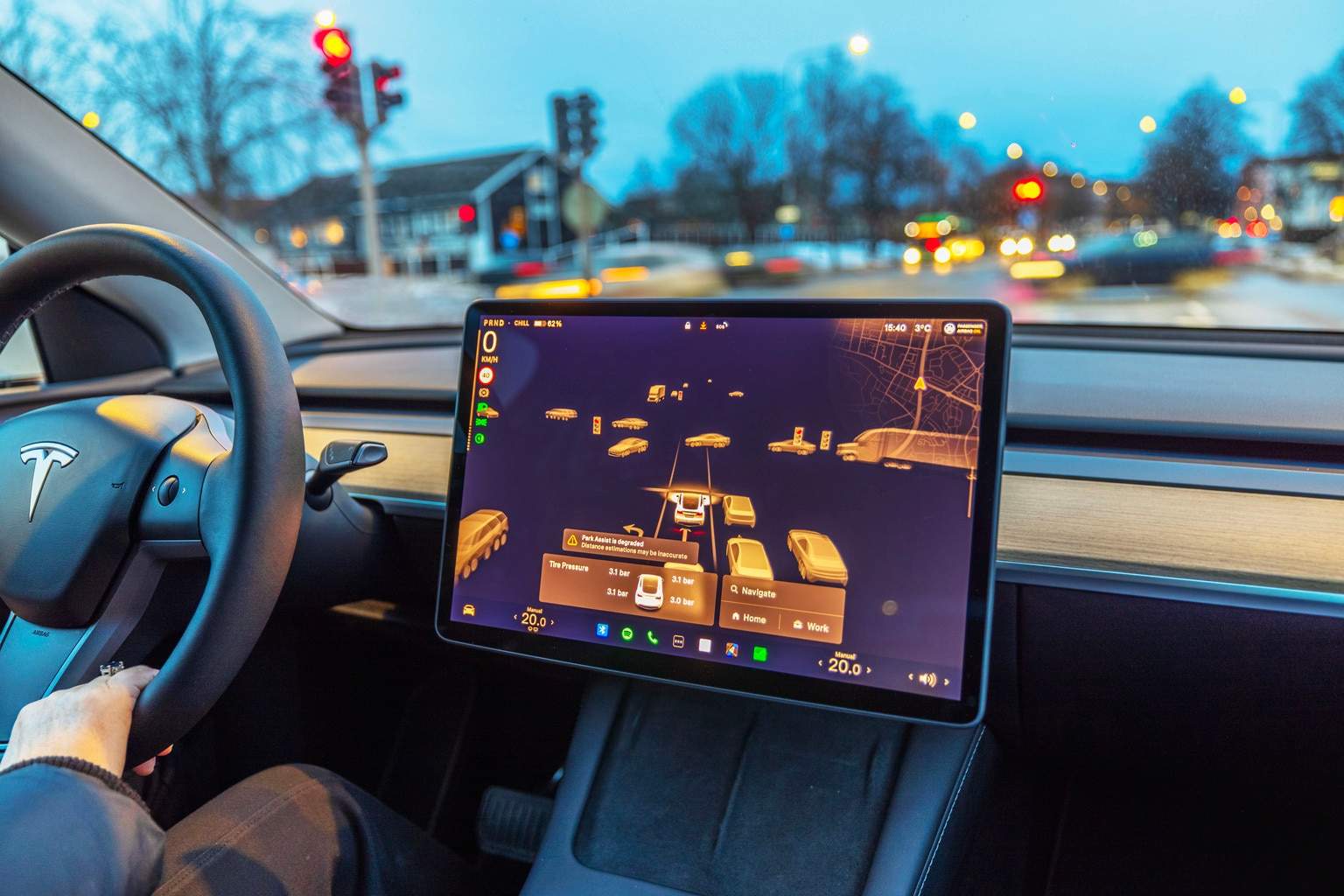
Belgium’s Flanders region is moving to fast-track approval of Tesla Full Self-Driving (Supervised), potentially making it the second European market to authorize the driver-assistance system, even as internal records reveal that several EU regulators remain skeptical of the technology’s safety claims.

Flanders Seeks Rapid Homologation
Flemish Minister of Mobility Annick De Ridder announced on Monday that she has formally requested Tesla submit its FSD documentation to the Flemish administration for review. “The file is now with my administration, which I have instructed to provide clarity by the end of the week on a possible fast-track homologation,” De Ridder wrote on X. Flanders, Belgium’s Dutch-speaking northern region, shares a border with the Netherlands — the only EU member state where Tesla’s FSD (Supervised) is currently approved and operational.
The Netherlands’ RDW vehicle authority granted Tesla type approval for FSD on April 10 under UN Regulation 171, following more than 18 months of testing and 1.6 million kilometers of European road data. Dutch Tesla owners with Hardware 4 vehicles have been driving with the system active on public roads since then. If Flanders moves forward before the EU-wide process concludes, Belgium would become the second European market where FSD is available to owners.
EU-Wide Approval Faces Headwinds
Broader European approval appears less certain. Reuters published an exclusive analysis of internal EU regulator correspondence on Monday showing that authorities in Sweden, Finland, Denmark, and Norway have raised concerns about FSD’s safety. A Swedish Transport Agency investigator wrote in an April 15 email that he was “quite surprised” to learn Tesla permitted FSD to exceed posted speed limits, stating that such behavior should not be allowed under European traffic law.
Other regulators cited concerns about FSD’s performance on icy roads and questioned whether Tesla’s safety data, drawn predominantly from U.S. driving conditions, adequately reflects European traffic environments. Some officials also expressed frustration with what they described as Tesla’s strategy of encouraging vehicle owners to lobby their governments for faster approval.
For EU-wide approval, representatives from 55% of member states and 65% of the bloc’s population must vote yes. No vote was scheduled for this week’s Technical Committee on Motor Vehicles meeting on May 5, where Dutch officials presented the rationale behind their approval. The next committee meetings where a vote could occur are expected in July and October.
China and Global Outlook
Tesla is also working toward a broader FSD launch in China, where executives told investors during the company’s first-quarter earnings call in late April that the target is now Q3 2026 — a delay from Elon Musk’s earlier projections of February or March. Tesla has built local infrastructure including a Shanghai data center and a mapping partnership with Baidu to comply with Chinese data rules, though regulatory constraints remain. Meanwhile, FSD v14.3.2 has begun rolling out in the U.S., with Tesla continuing to iterate on the software as it pushes for approvals across multiple continents.