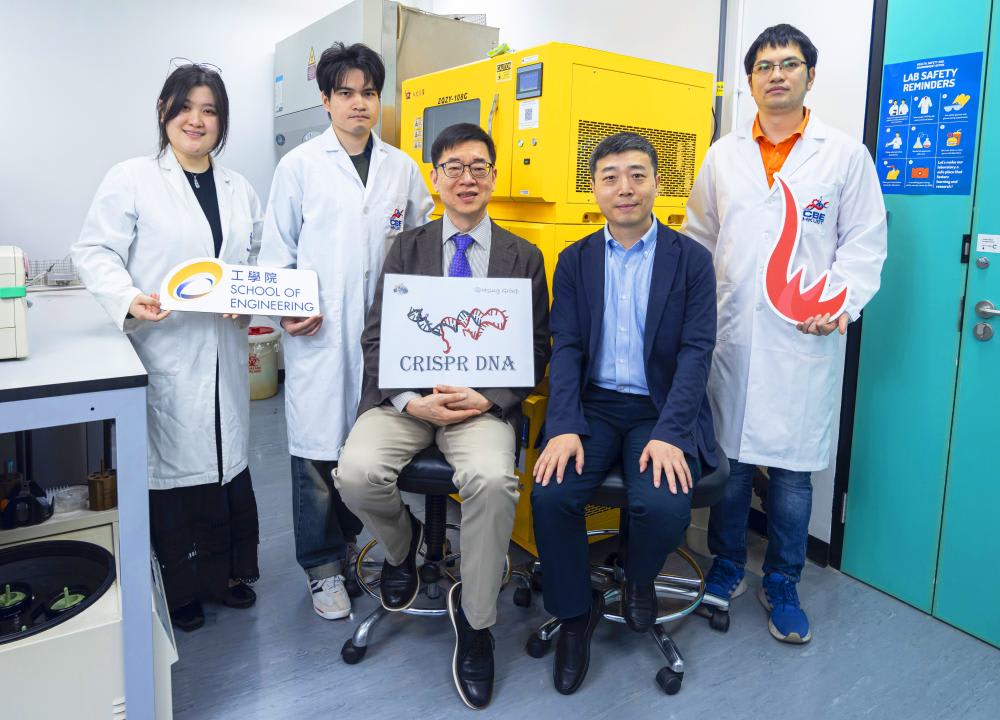
Researchers at the Hong Kong University of Science and Technology have created a CRISPR gene-editing tool that uses DNA guides instead of the traditional RNA guides — a reversal of the system’s natural mechanism that could transform point-of-care diagnostics and antiviral therapies.
The findings, published in Nature Biotechnology on May 1, represent what the university describes as the world’s first DNA-guided CRISPR-Cas system capable of programmable RNA targeting and cleavage.
Inverting the CRISPR Paradigm
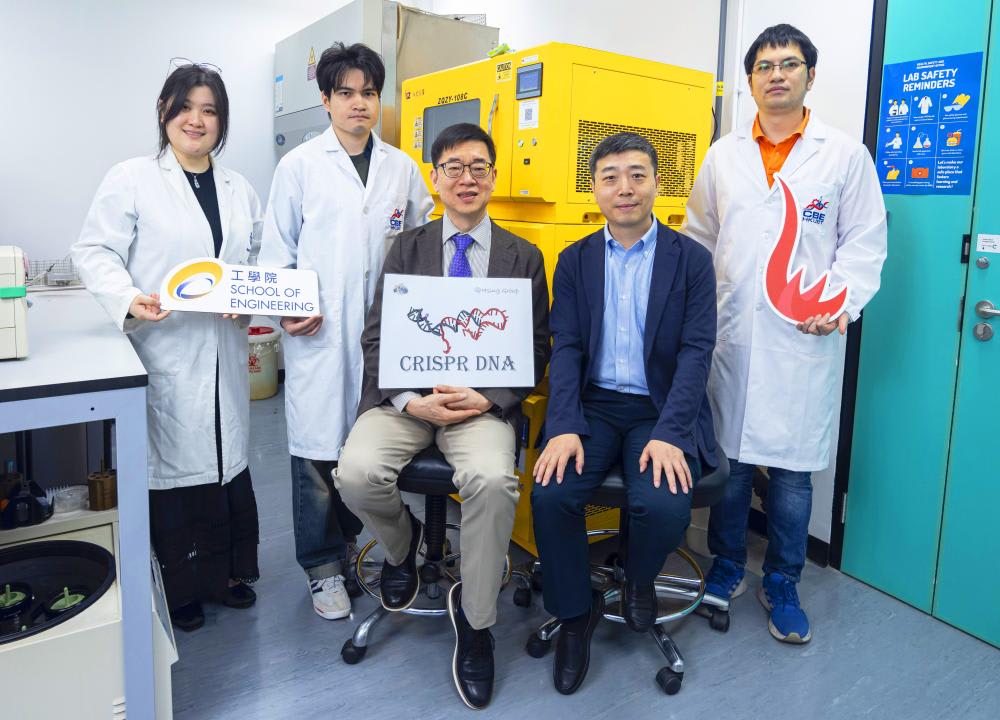
The research team, led by Professor Hsing I-Ming of HKUST’s Department of Chemical and Biological Engineering in collaboration with Associate Professor Zhai Yuanliang of the Division of Life Science, engineered a synthetic “CRISPR DNA” (crDNA) molecule that reprograms the Cas12a protein to use DNA as a guide for targeting RNA molecules.
Traditional CRISPR systems rely on RNA guides to direct proteins toward DNA targets. The HKUST team decoupled two functions normally combined in the natural system — the activation signal (the PAM sequence) and the information-carrying address — creating a functional deoxyribonucleoprotein complex capable of recognizing and cleaving selected RNA targets.
The use of synthetic DNA guides offers practical advantages over RNA: greater chemical stability, lower synthesis cost, and no requirement for cold-chain storage, making the system suited for deployment in clinics, airports, and resource-limited settings.
Diagnostic Platform Validated on Clinical Samples
Building on this mechanism, the team constructed a diagnostic platform called SLEUTH (Specific Locus Evaluation Utilizing Targeted Hydrolysis), which couples isothermal amplification with DNA-guided Cas12a readout. The one-pot assay achieved attomolar-level sensitivity and 100% concordance with RT-qPCR across 31 clinical SARS-CoV-2 samples.
The system also demonstrated approximately 76% mRNA knockdown in human cells with minimal off-target effects confirmed by RNA sequencing, suggesting therapeutic potential beyond diagnostics. Compared to the existing RNA-targeting tool Cas13, the DNA-guided Cas12a system produces fewer collateral RNA cleavage effects — a safety consideration for future therapeutic development.
Future Applications
HKUST has filed two U.S. provisional patents and is exploring applications in antiviral therapies, live-cell RNA imaging, and programmable RNA regulation. Over the next three years, the team plans to expand SLEUTH to detect other respiratory viruses and investigate liquid biopsy applications for identifying circulating RNA biomarkers in cancer.