An international team of researchers has unveiled a CRISPR-based technology that takes a radically different approach to fighting disease: rather than editing genes, it destroys entire cells from the inside out. The tool, built around a protein called Cas12a2, acts as a molecular paper shredder, ripping apart the genome of cancer or virus-infected cells while leaving healthy tissue unharmed. The findings were published in Nature on May 5.
How It Works
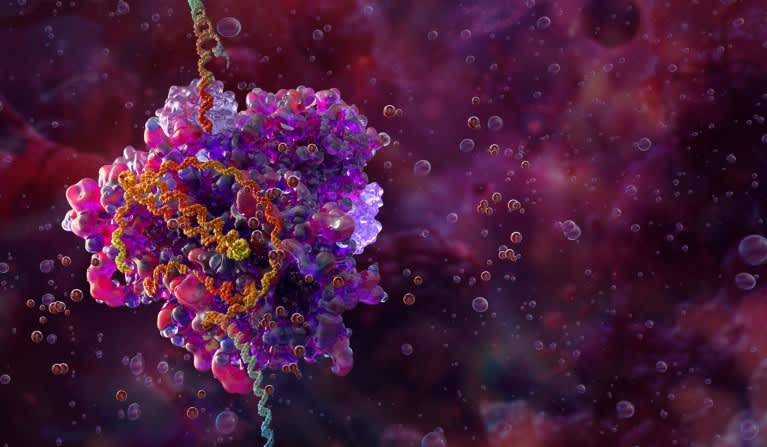
Unlike conventional CRISPR systems that precisely cut and repair DNA, Cas12a2 is programmed with a guide RNA to recognize RNA sequences unique to diseased cells. Once triggered, the protein unleashes indiscriminate nuclease activity, degrading single-stranded RNA, single-stranded DNA, and double-stranded DNA throughout the cell. Overwhelmed by the damage, the targeted cell self-destructs through apoptosis.
“Its goal is not to correct anything,” said Yang Liu, assistant professor of biochemistry at the University of Utah Health and co-senior author of the paper. “Instead, it’s to destroy anything it sees.”
The specificity comes from the activation step: Cas12a2 remains inert unless it encounters the precise RNA sequence it was designed to detect. “The enzyme that we’re working with is extremely specific,” Liu said. “It does not touch the healthy cells.”
Results in Cancer and HPV
In laboratory tests, Cas12a2 reduced the proliferation of human lung cancer cells carrying an oncogenic mutation by 50%, performing comparably to established chemotherapy drugs such as cisplatin. Collaborators at Akribion Therapeutics found that when targeted to a viral RNA sequence, Cas12a2 reduced the growth of HPV-infected cells by more than 90% without harming healthy cells.
In early animal experiments, injecting HPV-targeted Cas12a2 into virus-infected tumors in mice slowed tumor growth, while a separate test at Utah State University showed a single treatment reduced tumor volume by roughly 50%.
“Because Cas12a2 can be programmed with a guide RNA to target any RNA sequence, and it shows little to no off-targeting, we believe we have discovered a way to selectively kill cells across all of biology,” said Ryan Jackson, a Utah State University professor and co-corresponding author.
Challenges Ahead
The researchers cautioned that considerable hurdles remain before the technology could reach patients. Delivering sufficient quantities of the protein to the right tissues is a fundamental challenge, and the effects of Cas12a2’s mere presence in healthy organs are not yet fully understood. “If you try to treat an organism, different organ systems might uptake Cas12a2, and we don’t yet know how just the presence of the protein, even if it’s not being activated, affects an organism,” said co-author Braydon McCoy Thompson.
Liu said the team envisions the technology could eventually be programmed against other viral diseases, including HIV. “Curing the incurables,” he said.