OpenAI’s Codex coding agent recorded 90 million installs in a single week, a figure the company says represents seven days of downloads rather than a cumulative lifetime total, according to CryptoBriefing. The surge follows the rollout of GPT-5.5, which OpenAI released on April 23 and which expanded Codex’s context window to 400,000 tokens while reducing token usage compared to its predecessor.
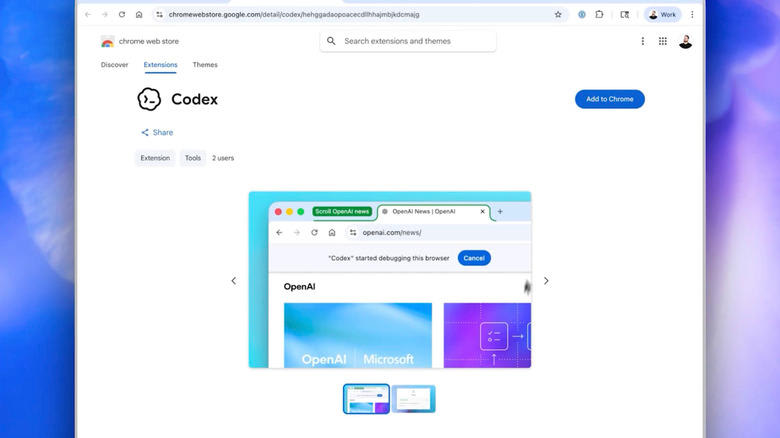
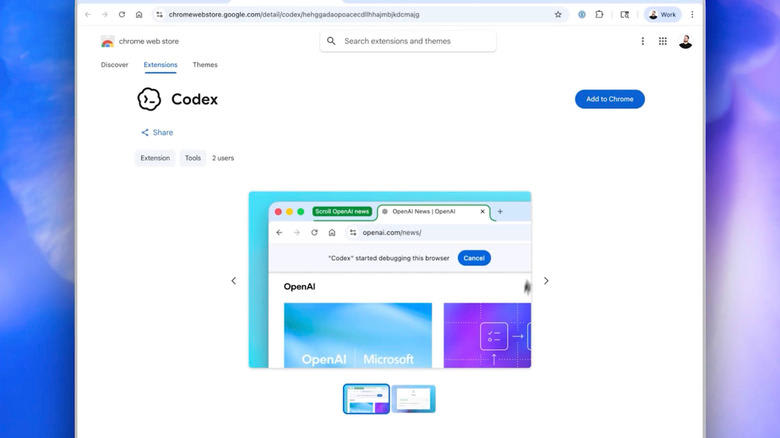
The milestone arrives alongside a new Chrome browser extension that OpenAI launched this week, marking a push to make Codex useful beyond traditional coding workflows.
Chrome Extension Opens the Browser to Codex
The Codex Chrome extension, available through the Plugins menu in the Codex desktop app, gives the agent its own tab groups so it can test web applications, gather context across signed-in sites like Salesforce, Gmail, and LinkedIn, and use Chrome DevTools — all without taking over the user’s active browsing session.
OpenAI designed the extension to fill a gap left by the existing in-app browser, which handles localhost previews and public pages but cannot access sites requiring a user’s logged-in state. The agent selects automatically among three tool tiers — dedicated plugins, Chrome when it needs signed-in browser context, and the in-app browser for local development — though users can also invoke Chrome directly with@Chromesyntax in a prompt.
The extension requests broad permissions including access to browsing history and page data, but OpenAI has layered a per-site confirmation system on top, requiring explicit approval before Codex interacts with a new domain.
GPT-5.5 Powers Efficiency Gains
OpenAI president Greg Brockman described GPT-5.5 as “a faster, sharper thinker for fewer tokens” during the model’s launch in April. The model matches GPT-5.4’s per-token latency while delivering what OpenAI calls stronger agentic coding and computer-use capabilities. CryptoBriefing reported that the efficiency improvements translated to roughly 40 percent lower token consumption for Codex tasks.
Security, Memory, and Automations Round Out the Platform
The install surge also reflects a broader platform expansion. Codex Security, which OpenAI introduced in early March under the former name Aardvark, uses frontier models to scan repositories, build project-specific threat models, and propose patches for validated vulnerabilities. During its beta testing period, the tool scanned more than 1.2 million commits across external repositories and identified 792 critical and over 10,500 high-severity findings.
Automations now support reusing existing conversation threads, allowing Codex to preserve earlier context and self-schedule to continue long-running work across days or weeks. A memory feature, currently in preview, lets Codex retain preferences, corrections, and project conventions across sessions so users spend less time repeating context.