Researchers at Seoul National University have developed a CRISPR-based biocontainment system that permanently shuts down engineered bacteria by editing their DNA without cutting it — a strategy that could reshape biosafety standards for industrial and therapeutic microorganisms.

A Genetic “Kill Switch” Without the Damage
The study, published in Nucleic Acids Research in May 2026, introduces what the team calls the eEGM (editing-driven essential gene multiplex inactivation) module. The system uses a catalytically inactive form of CRISPR-Cas9, known as dCas9, fused to a cytidine deaminase enzyme. Rather than slicing through the DNA double helix — a process that can destabilize the genome — the system precisely converts specific nucleotides in the start codons of essential genes, permanently blocking protein production.
“This study presents a novel strategy for precise and irreversible control of microbial cell survival using base editing,” said Professor Sang Woo Seo, the study’s corresponding author. “We believe this technology has strong potential as a next-generation biosafety platform.”
The approach works by reprogramming ATG start codons into non-functional alternatives, effectively flipping off what the researchers describe as the “power buttons” required for bacterial survival. Once activated by a brief induction pulse, the genetic changes are permanent and do not require the continuous presence of the editing machinery.
Multiplexed Targeting Slashes Escape Risk
A persistent challenge in biocontainment has been the emergence of escape mutants — rare bacteria that evade kill switches and continue to proliferate. The Seoul National University team addressed this by simultaneously targeting three essential genes from non-redundant biological pathways: holA, ftsB, and dfp. This multiplexed approach drove escape frequencies to or below 10⁻⁸ within one hour of pulse induction, meeting the threshold set by U.S. National Institutes of Health guidelines.
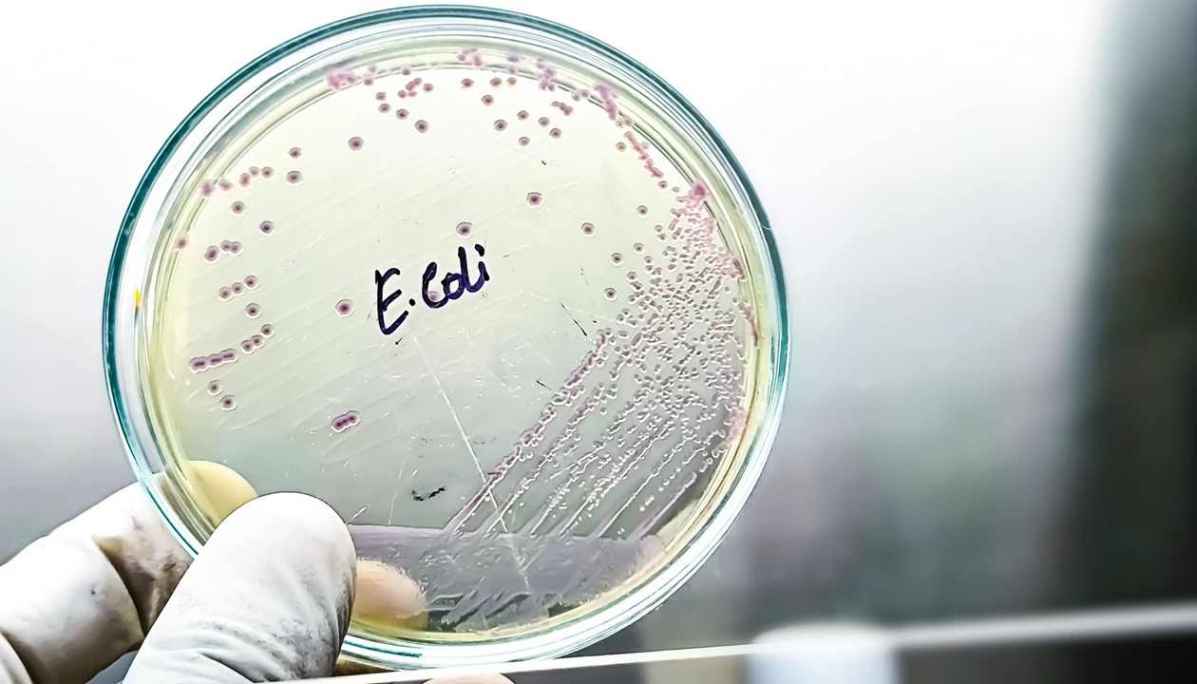
The system also demonstrated portability across multiple E. coli strains, including the laboratory strain MG1655, the industrial strain W3110, and the probiotic strain Nissle 1917, without interfering with the expression of engineered genes the bacteria were designed to carry.
Implications for Industry and Medicine
Conventional CRISPR-Cas9 kill switches rely on DNA cleavage to destroy cells, but this mechanism introduces off-target damage and selective pressure that can erode containment over time. CRISPRi-based approaches, which repress genes without editing, are less toxic but reversible — meaning bacteria can resume growth once the repressive signal fades.
The eEGM module occupies a middle ground: it achieves the permanence of cleavage-based systems with the low toxicity of interference-based ones. The researchers envision applications spanning biofuel and biodegradable plastics production to engineered live biotherapeutics, where preventing unintended microbial proliferation inside the human body is essential. Further validation in complex ecological settings remains necessary before deployment, but the platform establishes base editing as a viable new tool for programmable, durable biocontainment.