Discounts on Russia’s flagship Urals crude have widened after weeks of narrowing, as shifting expectations around a potential end to the U.S.-Iran war have dampened appetite for Russian barrels that had surged during the Strait of Hormuz crisis.

Ceasefire Hopes Fade, but Market Dynamics Shift
The widening comes as the oil market digests contradictory signals from the Middle East. On one hand, hopes for a peace deal between Washington and Tehran briefly pushed Brent below $100 a barrel last week after Reuters reported the two sides were nearing an agreement, with Iran reviewing a U.S. proposal transmitted through Pakistani mediators. On the other, President Donald Trump on the weekend rejected Tehran’s response as “totally unacceptable,” sending prices higher again.
The volatile outlook has left buyers of Russian crude recalculating. During the height of the Hormuz disruption — which blocked roughly 20 percent of global seaborne oil trade starting in early March — demand for Russian barrels surged as refiners scrambled for alternatives, narrowing the Urals discount to Dated Brent to as little as $15–$17 per barrel on an FOB basis at the Baltic port of Primorsk in April, according to Reuters. In early April, Urals prices hit a 13-year high of $116.05 per barrel. But the prospect, however fragile, that Hormuz traffic could resume has begun to erode that premium.
Ukraine’s Drone Campaign Compounds Pressure
Russia’s energy sector faces a second front. Ukraine carried out at least 21 strikes on Russian oil infrastructure in April, targeting refineries, export terminals, and pipeline networks, according to Bloomberg data cited by multiple outlets. The campaign pushed average Russian refinery throughput to 4.69 million barrels per day, the lowest level since December 2009, analytics firm OilX estimated.
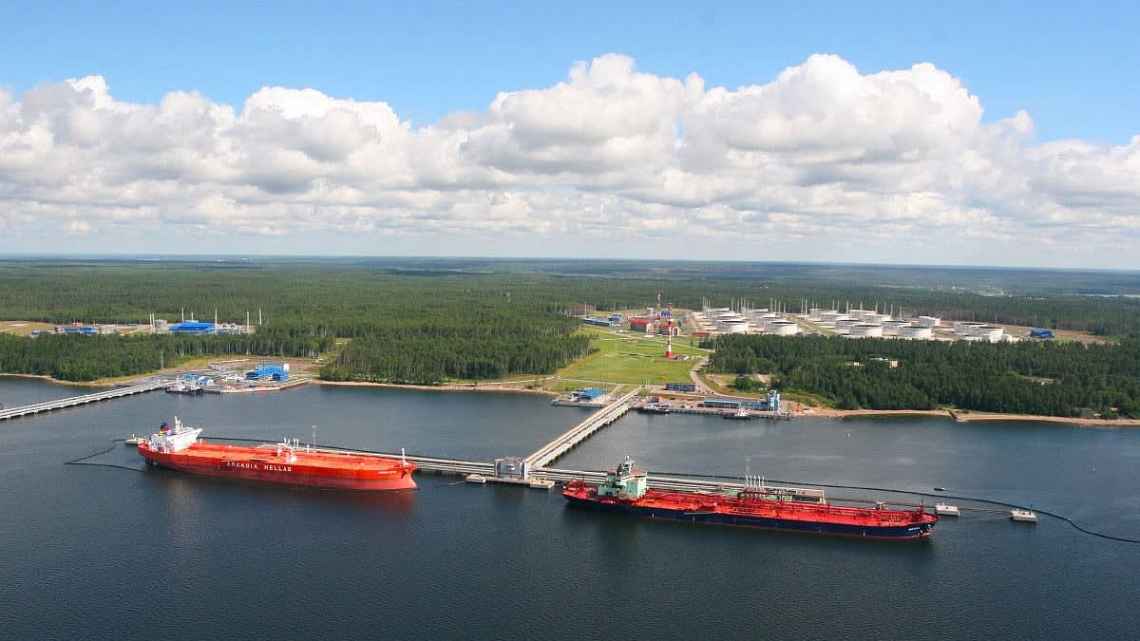
On May 3, Ukraine struck Russia’s primary oil-export terminal at Primorsk on the Baltic Sea and hit tankers that Kyiv said belonged to Russia’s sanctions-evading “shadow fleet,” according to the Associated Press. President Volodymyr Zelenskyy said long-range strikes had already cost the Kremlin $7 billion in 2026.
A Fragile Equilibrium
The combination of weakening emergency demand and constrained supply capacity has placed Russian crude in an uncomfortable position. Morgan Stanley warned this week that global oil markets are in “a race against time,” cautioning that if the Strait of Hormuz remains shut into late June, Brent could be forced sharply higher — to between $130 and $150 a barrel under a bullish scenario. For now, Russia is caught between a war that elevated its crude prices and a peace prospect that threatens to undercut them, even as Ukrainian drones steadily erode its ability to refine and export.