Europe’s accelerating military buildup is colliding with fiscal reality, as Baltic and Eastern European officials warn that the continent’s defense spending surge threatens to saddle governments with unsustainable debt burdens.
Estonia’s central bank governor and European Central Bank Governing Council member Madis Müller has repeatedly cautioned that rising defense expenditures cannot be treated as a temporary shock. In a July 2025 joint statement with the International Monetary Fund, Müller stressed that “the budget deficit and the growth in the public debt” must be “kept under control so that the Estonian state will be able to cope with any future crises”. The IMF warned Estonia that as defense spending climbs rapidly, reducing the fiscal deficit has become “even more urgent than it was last year”.

Eastern Europe Under Fiscal Strain
The warnings extend well beyond the Baltics. S&P Global Ratings on Tuesday placed negative outlooks on Hungary and Romania and recently downgraded Slovakia’s credit rating, citing fiscal pressures exacerbated by high defense outlays, energy costs, and generous social transfers. S&P forecasts Slovakia’s deficit will widen to 4.7% of GDP in 2026.
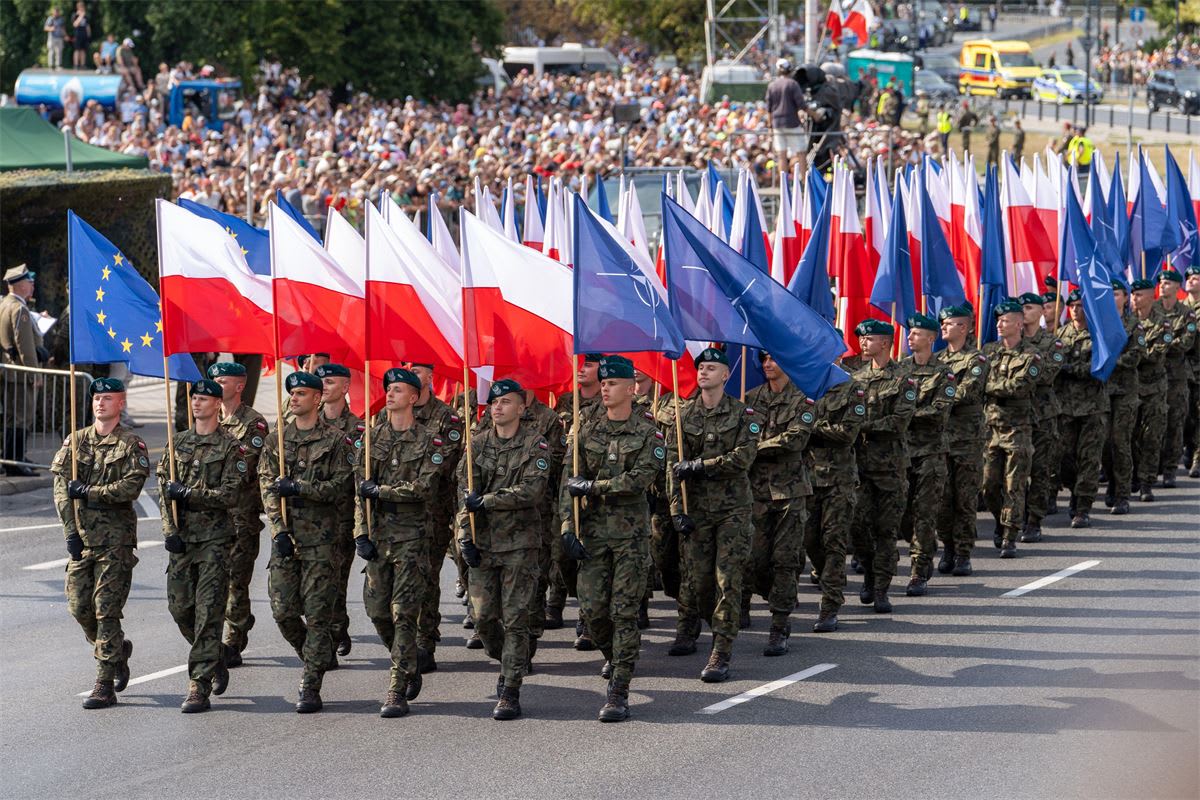
Reuters reported Wednesday that war, energy prices, and political instability are hampering Eastern Europe’s efforts to keep deficits in check, with Romania and Poland — the region’s largest economies — projected to run budget deficits exceeding 6% of GDP in 2026. Poland has committed a record 200 billion zloty to defense in its 2026 budget, pushing military spending to 4.8% of GDP, the highest ratio in NATO. Both Poland and Romania are already subject to the European Union’s excessive deficit procedure for breaching the bloc’s 3% ceiling.
The IMF’s “Guns Versus Butter” Warning
The IMF’s April 2026 World Economic Outlook dedicated an entire chapter to the macroeconomic consequences of defense buildups, finding that such booms worsen fiscal deficits by an average of 2.6 percentage points of GDP and raise public debt ratios by about 7 percentage points within three years. The fund warned that deficit-financed buildups, while producing larger short-term demand effects, “raise intergenerational trade-offs and can increase vulnerabilities over the medium term”. CNBC reported that the IMF has raised the alarm over a global “guns versus butter” trade-off as countries ramp up military budgets.
A New Bank — Without Full Backing
A proposed NATO-aligned Defence, Security and Resilience Bank aims to ease the strain by raising $135 billion in low-cost financing for allied governments and defense manufacturers. Multilateral negotiations on the DSRB’s charter concluded in Montréal on April 29, with Canada selected to host the institution’s headquarters. Major banks including JPMorgan Chase, Deutsche Bank, and RBC have backed the initiative.
However, both Germany and the United Kingdom declined to support the DSRB, preferring existing EU mechanisms such as the €150 billion SAFE loan scheme. Germany’s finance ministry told Reuters in December it opposes creating additional defense financing instruments, while Britain’s Treasury stated that the DSRB proposals “are not endorsed by the UK government”.
The tension between security imperatives and fiscal sustainability now sits at the center of European policymaking, with NATO allies committed to reaching 5% of GDP in defense spending by 2035 — a target that for Baltic states alone would require expanding military budgets by 48% to 60% beyond current levels.