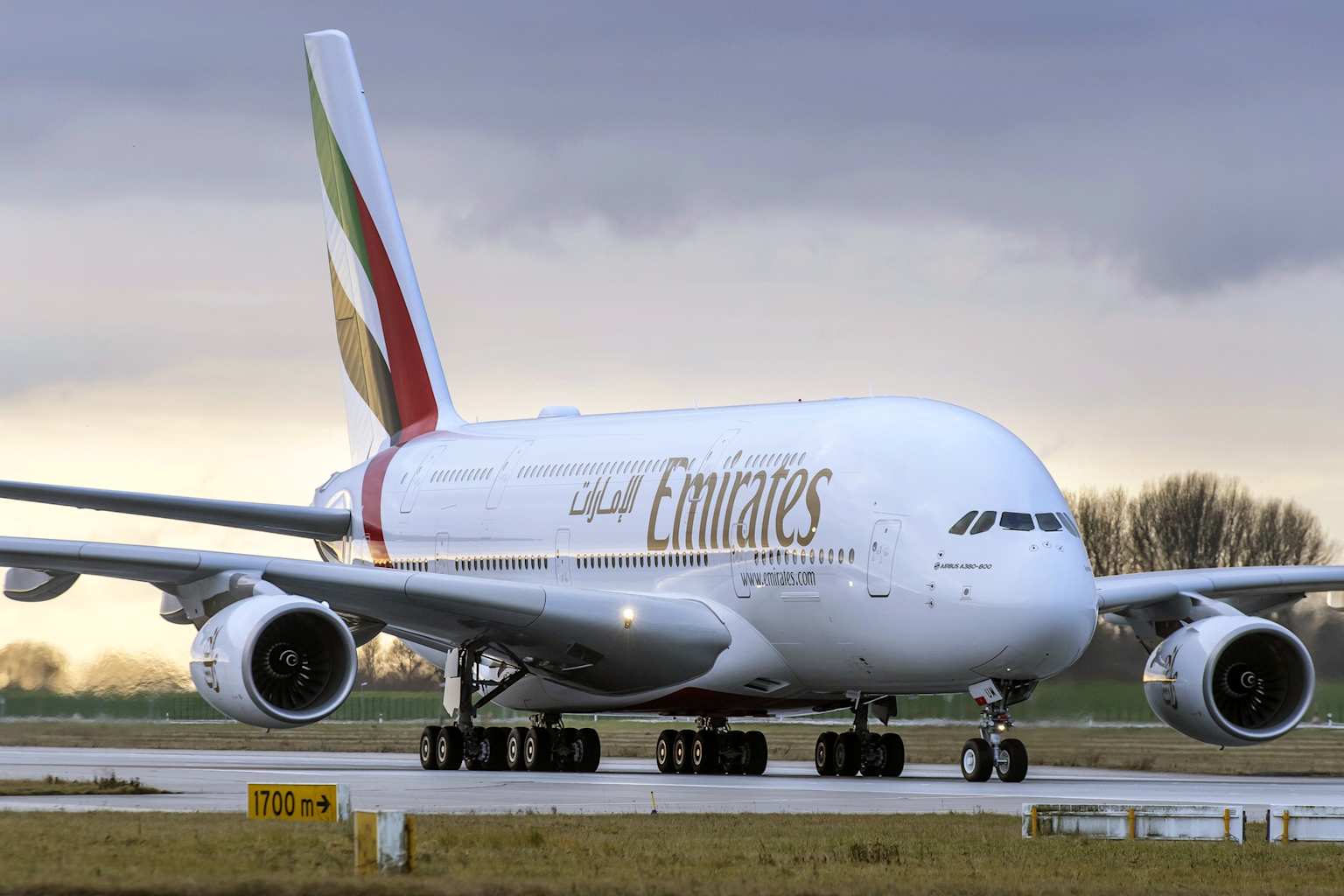
The Emirates Group reported its strongest-ever financial performance for fiscal year 2025-26, posting record profit, revenue, and cash reserves even as the US-Israel-Iran conflict that erupted on February 28 threw global aviation into its worst crisis since the pandemic.

Record Results Amid Regional Turmoil
For the 12 months ending March 31, 2026, the Emirates Group achieved a record profit before tax of AED 24.4 billion ($6.6 billion), up 7% year-on-year, with revenue reaching AED 150.5 billion ($41 billion), up 3%. Emirates airline alone posted a net profit of AED 19.7 billion ($5.4 billion), surpassing last year’s $5.2 billion result with a net profit margin of 15%, retaining its title as the world’s most profitable carrier.
The results came despite what the airline described as “a disruptive and challenging” final month of its financial year. The war triggered widespread airspace closures across the Middle East, with more than 52,000 flights to and from the region cancelled — more than half of all flights planned — since hostilities began. Emirates suspended all flights from its Dubai hub in the immediate aftermath of the initial strikes, before resuming a reduced schedule in mid-March.
War’s Impact on Aviation
The conflict sent shockwaves through global aviation. According to Reuters, Dubai International Airport suffered damage from Iranian strikes, while airports in Abu Dhabi and Kuwait were also affected. Jet fuel prices roughly doubled as the Strait of Hormuz blockade choked off both refined fuel exports and crude oil supplies from the Persian Gulf. Fortune reported that 23,000 flights were cancelled in the first week alone, stranding hundreds of thousands of travelers.
The UAE briefly closed its entire airspace on March 17 as a precautionary measure against incoming missiles and drones, with its defense ministry reporting it had intercepted over 300 ballistic missiles and approximately 1,600 drones.
Strong Position for Recovery
Sheikh Ahmed bin Saeed Al Maktoum, Chairman and Chief Executive of Emirates, said the airline enters the new financial year from a position of strength, with cash reserves at a record AED 59.6 billion ($16.2 billion), up 12% from last year.
“From a fuel perspective, Emirates is well-hedged until 2028-29; and we have worked with our suppliers to secure the volumes required to support our current operations and our scaling up to pre-disruption levels,” Sheikh Ahmed said. He noted that military activities between the US, Israel, and Iran are currently paused under a ceasefire agreement. “We hope for a clear resolution to the hostilities soon, and a return to market stability. But in the meantime, we are not sitting on our hands,” he added.
The airline said it would press ahead with aircraft deliveries, retrofit programs, and infrastructure expansion, while Emirates now operates to 137 destinations in 72 countries.