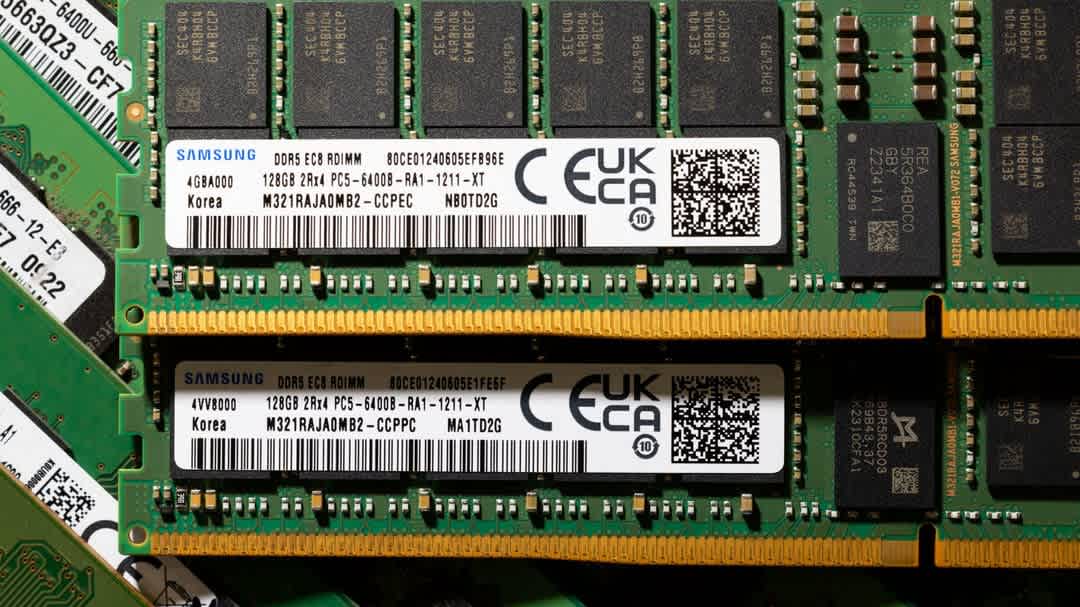
Memory chip stocks extended their historic rally on Friday as investors continued to digest Goldman Sachs’s dramatically revised forecast for DRAM and NAND prices, which the bank now projects will rise 250–280% and 200–250% respectively in 2026 — far above its January estimates of roughly 150% and 100%. The upward revision, issued April 24, characterizes the current environment as the most severe memory supply shortage in over 15 years.
Micron Technology surged more than 8% on Friday, while SanDisk climbed over 7% and Western Digital gained more than 3%, adding to a weeks-long rally that has seen memory stocks reach extraordinary heights in 2026.
AI Demand Overwhelms Supply
The revised forecast from Goldman Sachs analyst Giuni Lee projects a DRAM supply gap of approximately 4.9% and a NAND shortfall of about 4.2% — both at 15-year highs. AI servers now account for more than 50% of total DRAM demand, while manufacturers’ pivot toward producing high-bandwidth memory for AI chips has crowded out capacity for conventional DRAM and NAND products.
Samsung executive vice president of memory Jaejune Kim said in early May that the company’s “demand fulfillment rate is presently at an all-time low,” adding that customers are already pre-booking 2027 supply out of fear of prolonged shortages. Goldman Sachs now believes the shortage may persist through 2027, overturning its earlier projection that supply and demand would rebalance by then.
Contract Prices Already Soaring
The forecast is not merely theoretical. DRAM contract prices already surged 90–95% in the first quarter of 2026 alone, with NAND rising 55–60%. TrendForce projects another 58–63% DRAM price jump in the second quarter. Operating margins for major memory producers are forecast to reach 70–80% for DRAM, near record territory.
The rally has been staggering for investors. Micron stock has more than doubled year-to-date, while SanDisk has risen nearly 480% in 2026. Yet the comparison to previous cycles is giving some pause — the PHLX Semiconductor Index recently posted its strongest 25-day rolling performance since March 9, 2000, the day before the dot-com bubble peaked.
A Structural Shift
Goldman Sachs attributes the severity of the shortage to three converging forces: surging AI computing demand, increasingly complex HBM manufacturing that diverts capacity from conventional memory, and extremely low industry inventory levels that have eliminated supply elasticity. With U.S. export controls also blocking Samsung and SK Hynix from upgrading their China-based manufacturing capacity, the supply constraints appear entrenched.
Ben Reitzes of Melius Research called the pressure from DRAM and NAND shortages “substantial,” noting that rising component prices pose a “significant challenge” for hardware manufacturers across the industry.