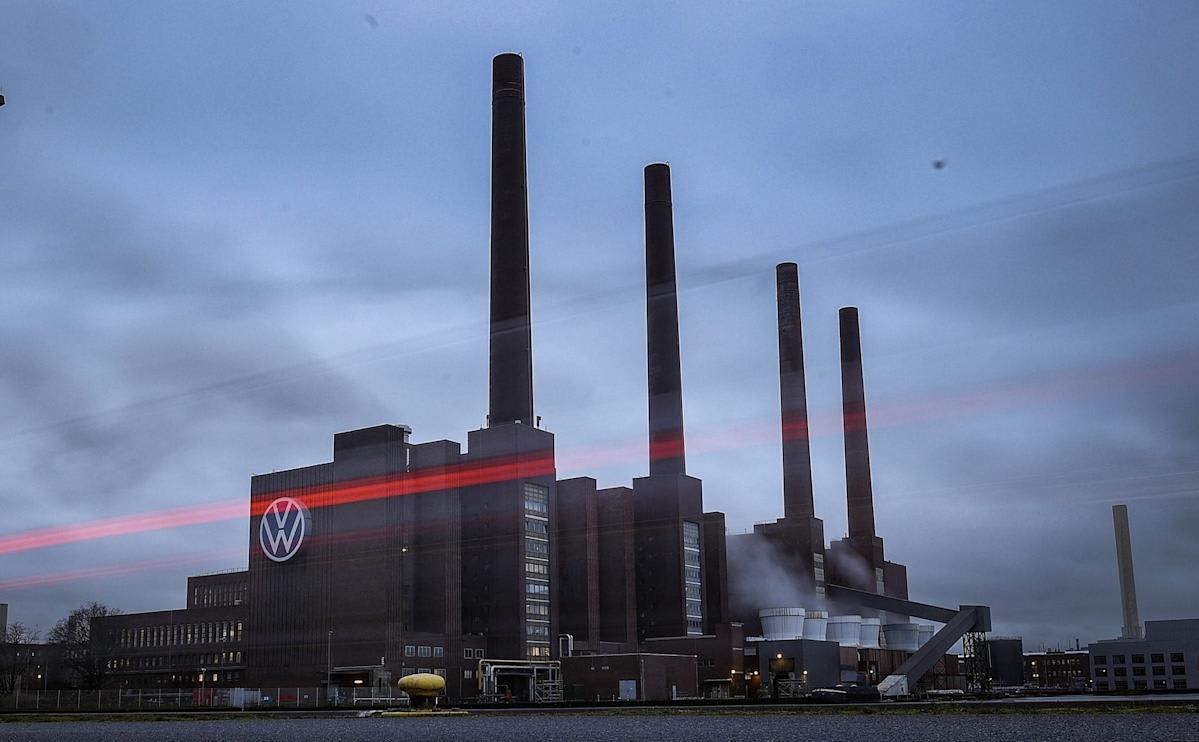
Volkswagen reported a sharp decline in first-quarter earnings on April 30, warning that its existing cost-reduction plans are “insufficient” as tariffs, Chinese competition, and a rocky EV transition squeeze Europe’s largest automaker from multiple directions.

Profits Miss Expectations
Operating profit fell 14.3% year-over-year to €2.46 billion in the first three months of 2026, well below analyst expectations of nearly €4 billion compiled by LSEG. Revenue slipped 2.5% to €75.7 billion, while net profit dropped 28% to €1.56 billion. The operating margin narrowed to 3.3%, down from 3.7% a year earlier. Vehicle deliveries declined 4% in the quarter, with weakness concentrated in the United States and China.
“The planned cost reductions to date are insufficient,” CFO Arno Antlitz said on the earnings call. “If we do not succeed in this, we will risk our future.”
Mounting Pressure on Costs and Capacity
CEO Oliver Blume has outlined a sweeping restructuring targeting a 20% reduction in costs across all brands by the end of 2028. The company plans to cut production capacity by one million vehicles in Europe by 2028, primarily at its Volkswagen and Audi operations, reducing its annual target to around 9 million units. Volkswagen has already committed to eliminating 50,000 jobs across its German brands by 2030.
Speaking at an event in Barcelona on May 6, Blume said tariffs now represent a burden of €5 billion per year on operating profit, according to Reuters. He told executives at a closed-door meeting earlier this year that the company must “lower the break-even point,” with plant closures not ruled out.
EV Margins Remain a Drag
Volkswagen acknowledged publicly that its current electric vehicles generate only 70–80% of the profit margins of equivalent combustion-engine models. Full margin parity is not expected until the next-generation Scalable Systems Platform arrives after 2030, replacing the existing MEB and PPE architectures. The SSP, which will also incorporate electronic architecture developed with Rivian, has been delayed from an original 2026 target.
The company is forecasting an operating return on sales of 4% to 5.5% for full-year 2026, an improvement over the 2.8% recorded in 2025. But with margins under pressure and trade barriers rising, Blume framed the challenge in stark terms: Volkswagen must adapt to a world “undergoing fundamental change,” shaped by “wars, geopolitical tensions, trade barriers, stricter regulations, and heightened competition.”